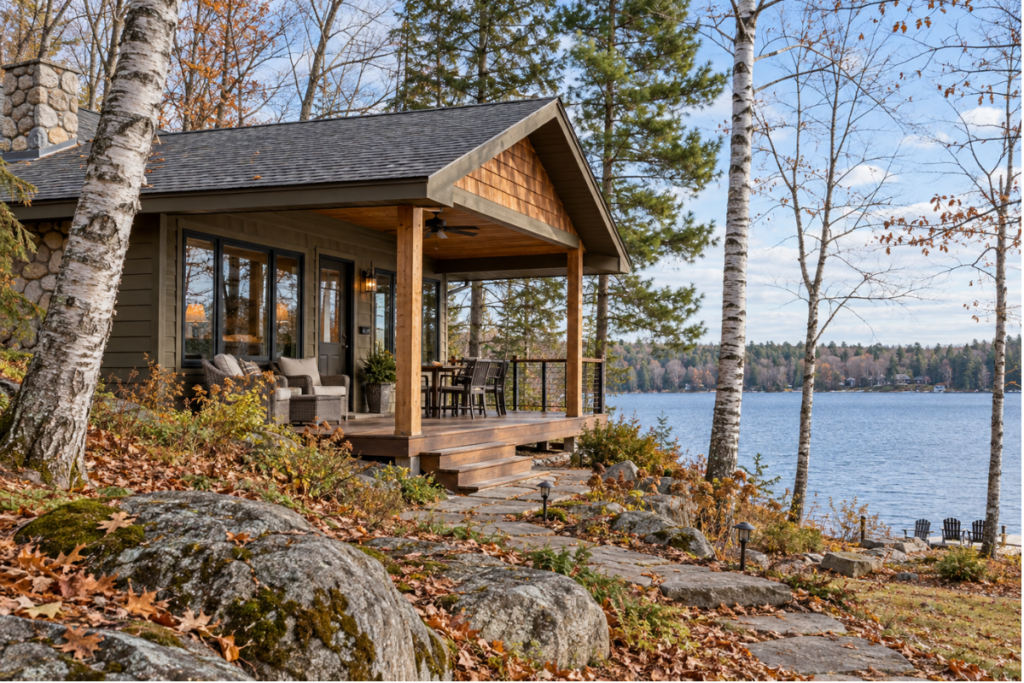
There is always one fall weekend when you realize the next trip to the cabin might be the last one of the season. The mornings are colder, the dock is quieter, and the extra blankets have found their way back onto the beds.
Closing your cabin for winter takes a little planning, especially in Minnesota. Before you pack the car and turn the key, use this checklist to protect your property and make next spring’s opening weekend easier.
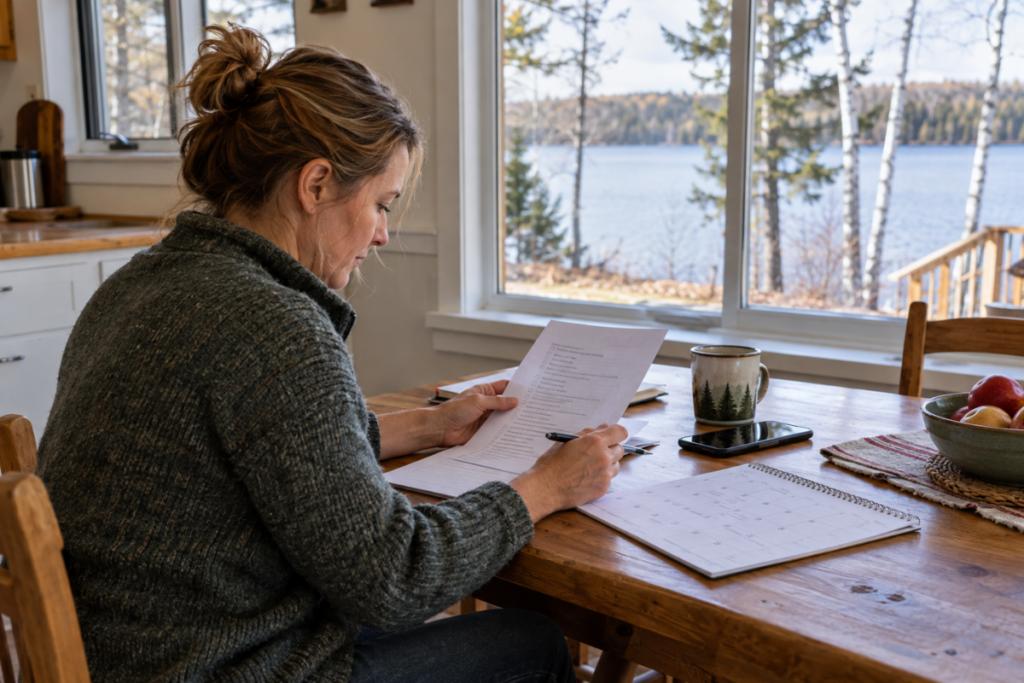
Start Before the Last Weekend
It is easy to leave everything for the final visit. However, some jobs need more notice. Plumbers, dock crews, and other seasonal service providers can fill their fall schedules quickly.
Choose your closing weekend early and list anything that needs professional attention. Schedule plumbing winterization, dock and boat lift removal, and heating service as needed. If your boat is going into storage, arrange its winterization separately.
Also, watch the forecast as your closing date approaches. Freezing weather may arrive before your usual last weekend at the lake.
Decide Whether the Cabin Will Stay Heated
A cabin that sits empty until spring needs a different plan than one you visit for ice fishing or winter weekends.
If you are closing an unheated cabin, arrange proper winterization for the plumbing and water-using appliances. If you plan to keep the heat on, service the heating system, confirm your fuel supply, and choose someone who can respond if the temperature drops.
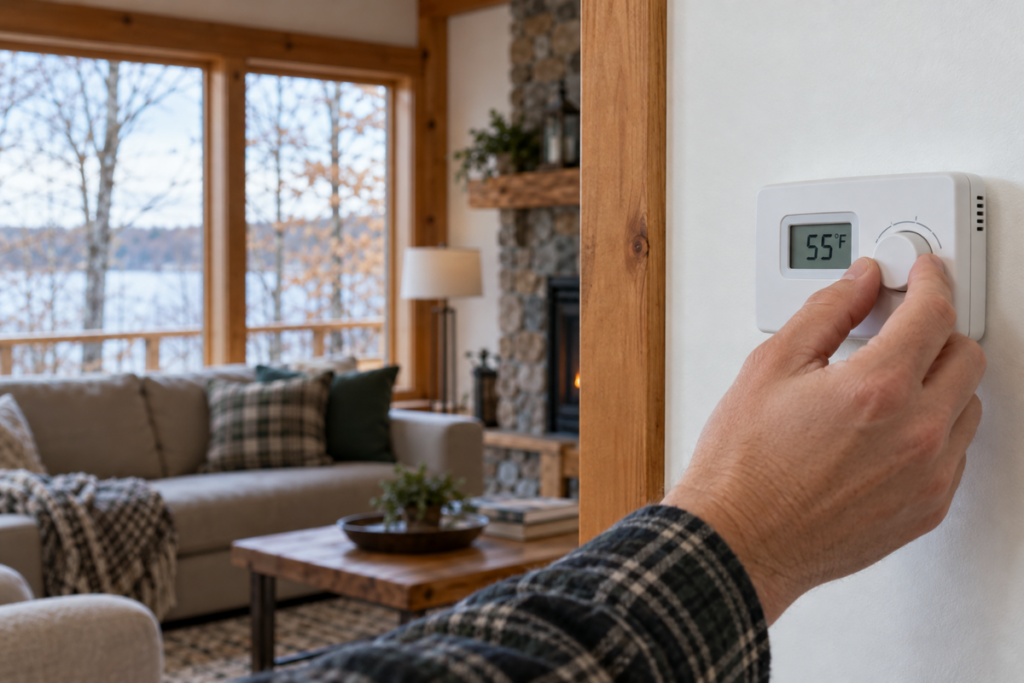
The American Red Cross recommends leaving the heat at no lower than 55°F when you are away during cold weather. However, that setting does not guarantee protection for pipes in crawl spaces, exterior walls, or other cold areas. Ask a qualified professional what your particular cabin needs.
Give the Water System Extra Attention
The water system deserves its own place on your cabin winter checklist. Turning off the main supply alone does not remove water trapped in pipes, fixtures, or appliances.
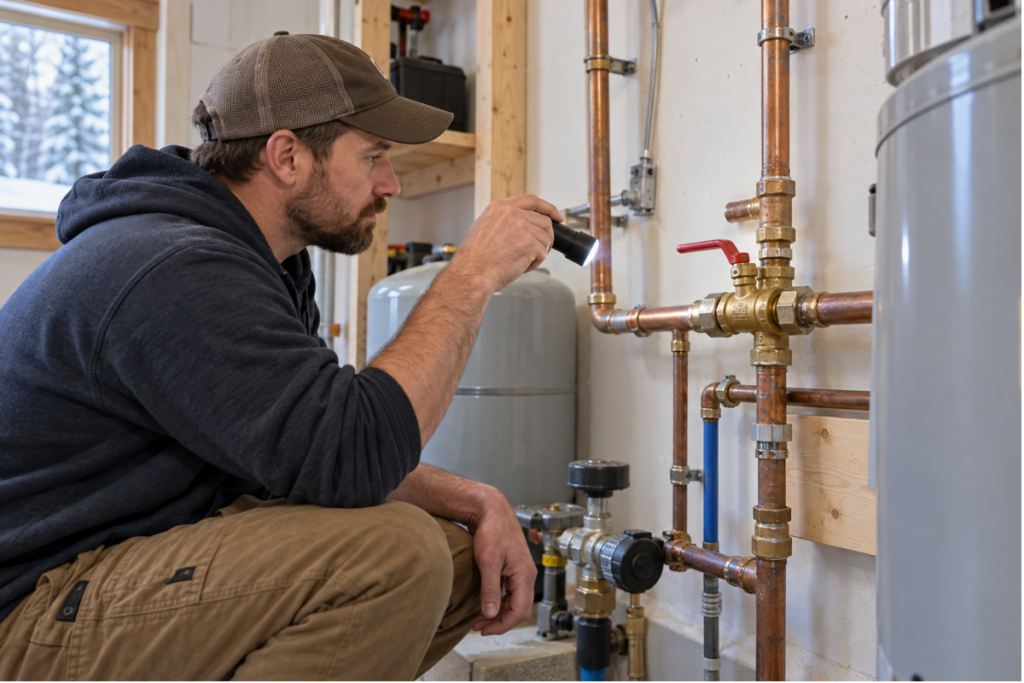
For a seasonal shutdown, have a qualified plumber follow a winterization plan for your cabin’s equipment. That may include the well pump, pressure tank, water heater, toilets, outdoor faucets, and water treatment equipment.
Do not overlook the dishwasher, washing machine, refrigerator water line, or ice maker. Each may have specific winter storage instructions.
Finally, keep a written record of the work. Note the closing date, service provider, and spring startup instructions so you are not left guessing next season.
Remember the Septic System
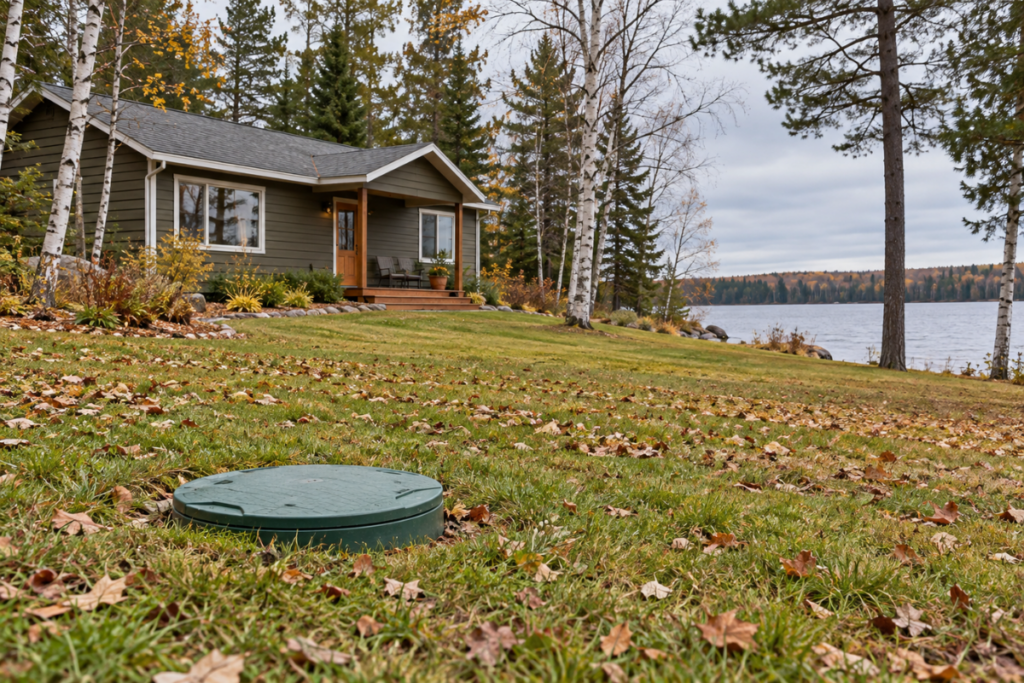
If your cabin has a septic system, include it in your fall planning.
Ask your septic professional whether inspection or service is due and whether your winter use creates any special concerns. Keep vehicles and stored equipment off the drain field.
For cabins that keep their water on, repair leaking fixtures before leaving. University of Minnesota guidance notes that a slow, steady trickle can contribute to septic freezing. It also cautions against putting automotive antifreeze, salts, or other additives into the plumbing.
Have your plumber specify the appropriate winterization procedure for your fixtures and septic system.
Empty the Kitchen More Thoroughly Than You Think
A half-used bag of pancake mix is easy to overlook when you are packing up the refrigerator. Unfortunately, it may be exactly what a mouse is looking for.
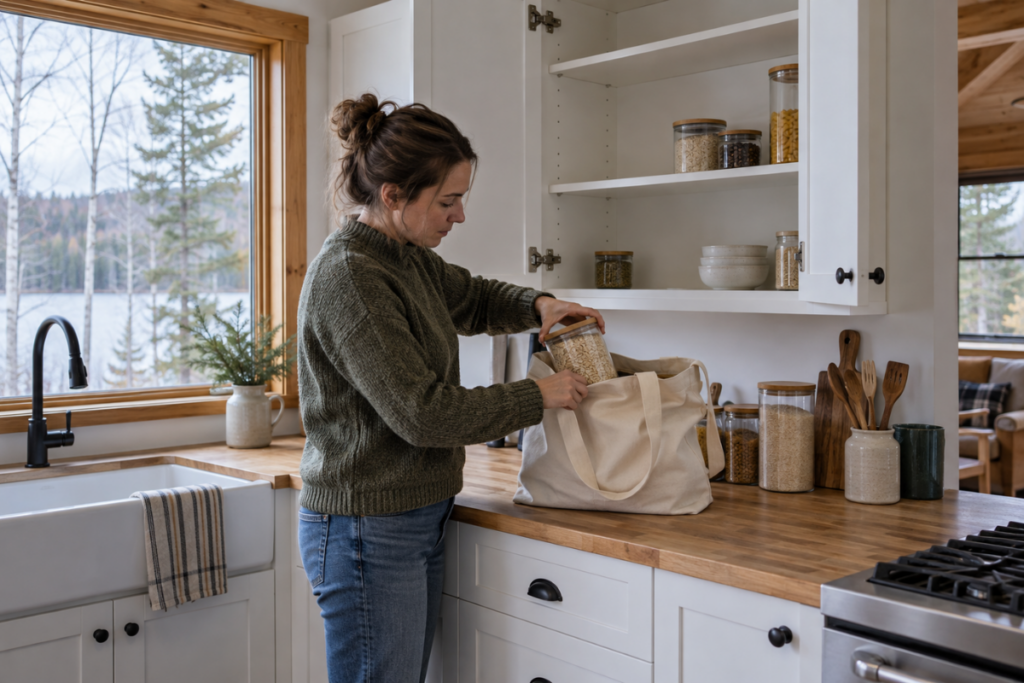
Take home perishable food and open pantry items. Check drawers, lower cupboards, and the back of shelves for snacks, pet food, and anything else that could attract pests. Remove drinks and other products that could freeze or leak.
If you are shutting down the refrigerator and freezer, empty them, defrost as needed, and clean and dry the interiors. Follow the manufacturer’s storage instructions, including how to keep the doors safely ajar when appropriate.
Finish by wiping kitchen surfaces, cleaning crumbs beneath small appliances, and taking out every bag of trash.
Leave Everything Clean and Dry
You do not need to make the cabin look ready for company. Still, leaving it dry and reasonably clean makes a difference.
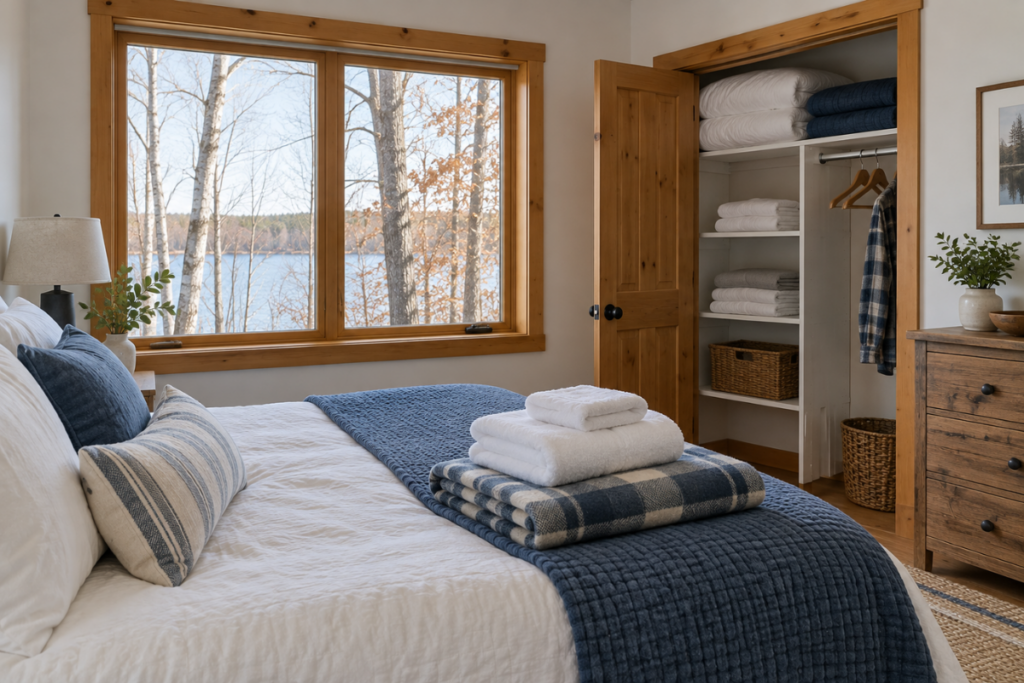
Wash and completely dry towels, bedding, and kitchen linens before storing them. Check closets, bathroom corners, and the space beneath sinks for dampness or leaks.
Bring home wet life jackets, beach towels, and cushions instead of packing them into a closed storage box. If you cover furniture, choose a breathable covering suited to the material.
Also, remove medications, liquid cleaning products, and other temperature-sensitive items that should not spend the winter in an unheated building.
Make It Harder for Mice to Move In
Once the cabin becomes quiet, small openings can become convenient entrances.
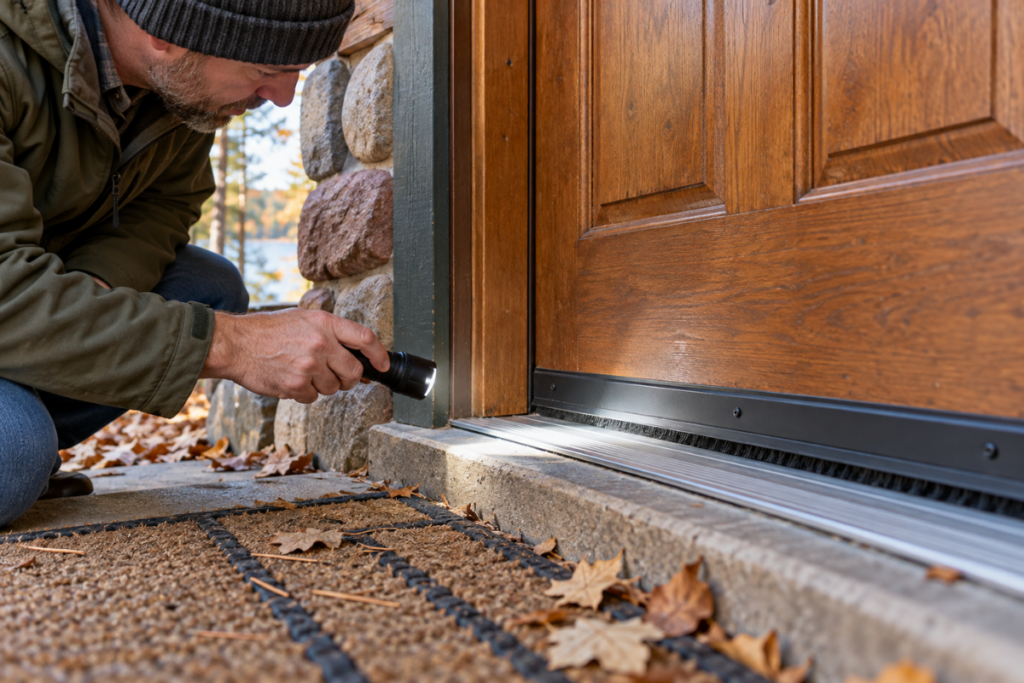
Look around doors, utility penetrations, the foundation, and accessible crawl-space areas for gaps or signs of activity. Repair damaged door sweeps and use durable, pest-resistant materials where appropriate.
Check that vent screens are intact without blocking ventilation the building needs. Move firewood and clutter away from the siding, and remove pet food and birdseed from indoor storage areas.
If you have recurring pest problems, arrange treatment and follow-up before closing. Addressing activity now is easier than discovering damage in May.
Walk Around the Roof, Gutters, and Foundation
Take one slow walk around the cabin before you finish the outdoor work.
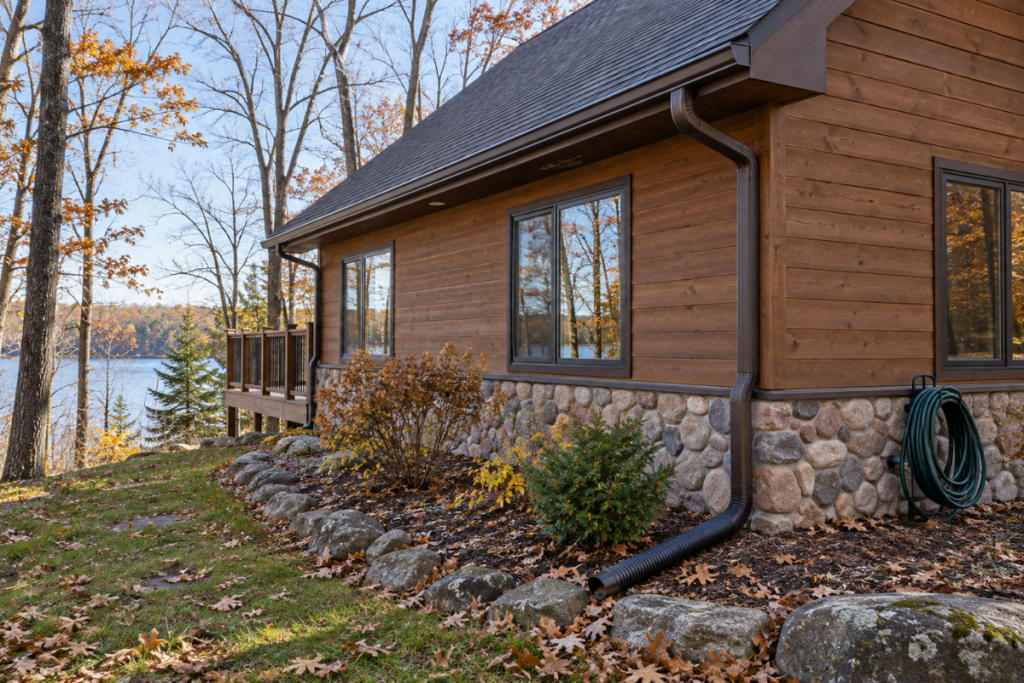
From the ground, look for damaged shingles, loose siding, sagging gutters, and branches that may need professional attention. Arrange gutter cleaning as needed, and check that downspouts direct runoff away from the foundation.
Disconnect and drain garden hoses. Include outdoor faucets in your plumbing winterization plan, and look for standing water near the building.
Photograph anything that needs repair. Those pictures will help you explain the problem when scheduling service.
Put the Lake Equipment and Outdoor Living Areas Away
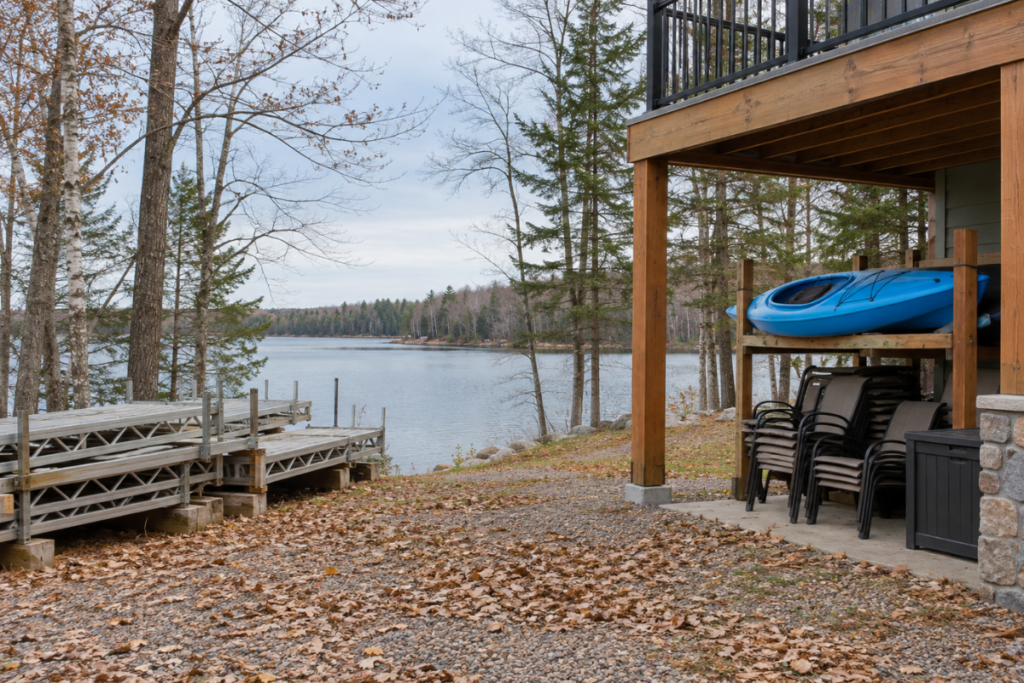
The chairs, kayaks, and little things scattered around the property can take longer to collect than expected.
Clean and dry outdoor furniture, cushions, umbrellas, and water toys before storing them. Secure sheds and storage boxes, and attach covers so they can withstand wind.
Arrange dock and boat lift removal or winter preparation based on your equipment and lake conditions. Inspect equipment for attached aquatic invasive species as it comes out of the water. Minnesota DNR requires docks and lifts to dry for at least 21 days before installation in another body of water.
Clean the grill and follow its manufacturer’s storage instructions. Keep propane cylinders outdoors in an appropriate location.
Be Deliberate About What Stays Powered
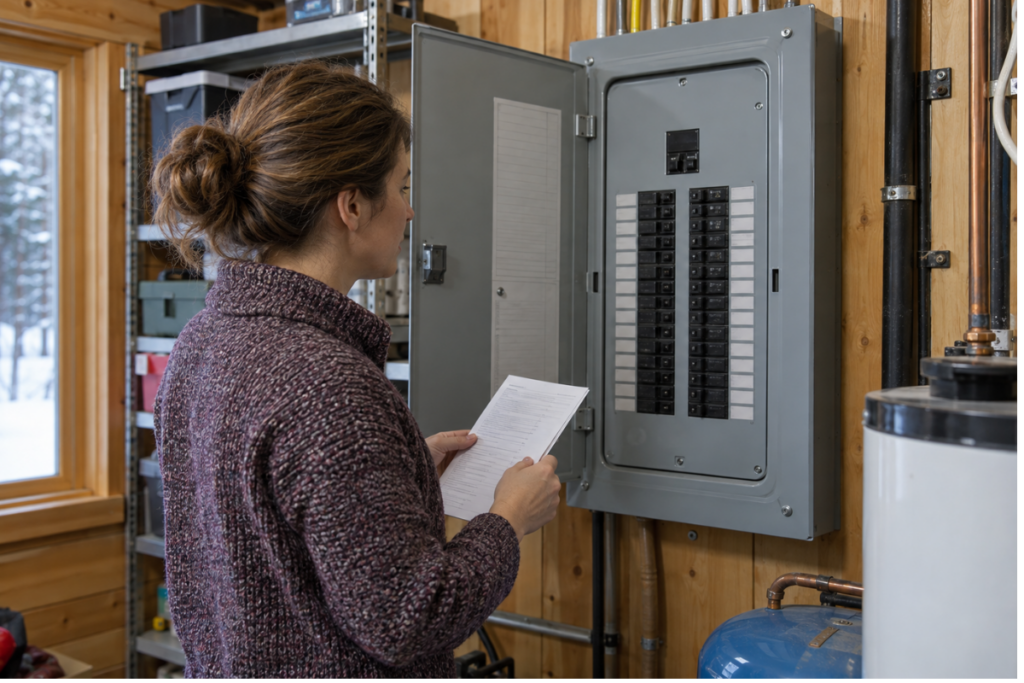
Before unplugging appliances or switching off breakers, list the systems that need electricity through winter.
Depending on your cabin, these may include heating equipment, a sump pump, septic components, security devices, or temperature monitoring. Label the necessary circuits so anyone helping with closing knows which ones must stay on.
Unplug nonessential electronics and small appliances. If you leave internet service active for cameras or alerts, test the connection before heading home.
A temperature sensor or leak alarm is useful only when someone receives the alert and can arrange a response. Decide who that person will be before you leave.
Take Photos and Arrange a Winter Check-In
A few photos can answer the questions that tend to surface halfway home.
Record the thermostat setting, labeled breaker panel, winterized fixtures, and condition of the rooms. Save service receipts and contact information in one place.
Ask a trusted neighbor, caretaker, or local service provider about periodic checks and visits after major storms. Make sure they can reach you and have authorized access if something needs attention.
Also, confirm your insurer’s requirements for an unoccupied cabin, including any expectations for heat, water shutoff, or inspections.
Do One Final Walk-Through
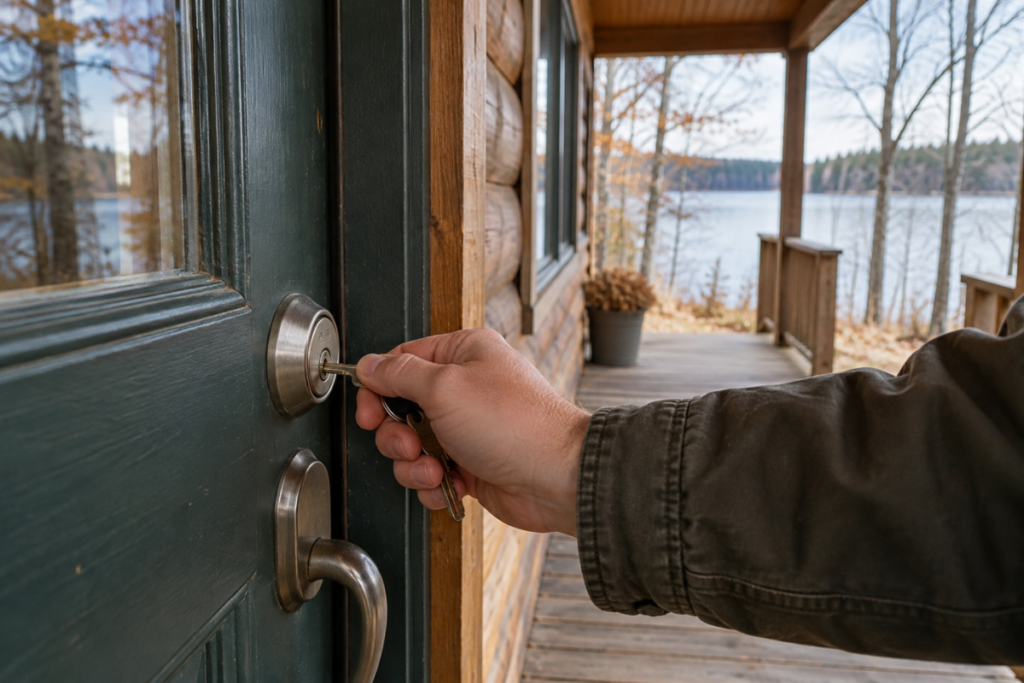
Before locking up, walk through the cabin one last time with your checklist in hand.
Check windows and exterior doors, remove the last trash bag, and confirm that the water and heating arrangements match your winter plan. Secure outbuildings and gather everything you intended to take home.
Then leave yourself a short note for spring. Include repairs to schedule, supplies to replace, and anything you want to remember before opening weekend.
Owning a cabin comes with wonderful weekends and a maintenance calendar of its own. Understanding how a property handles winter is part of finding one that fits the way you want to use it.
Whether you are thinking about buying your first cabin or selling a property your family has enjoyed for years, Betsy is happy to talk through your plans and help you consider the next step.
I’m Betsy Rewald with Coldwell Banker Realty in Minnesota, born and raised right here in the Land of 10,000 Lakes! I love helping people find their perfect home, whether it’s their first, their dream upgrade, or the perfect place to downsize.
Through my blog, I share tips and ideas for buying and selling, plus insights on great neighborhoods, local events, and ways to make the most of Minnesota living. My goal is to make the home journey fun, stress-free, and full of excitement.
Whether you’re new to the area or a lifelong Minnesotan, I’m here to help you feel right at home—and maybe even fall in love with your next move!
Blog Categories
Home Search Tools
Recent Posts
We use cookies to ensure that we give you the best experience on our website. If you continue to use this site we will assume that you are ok with this.