
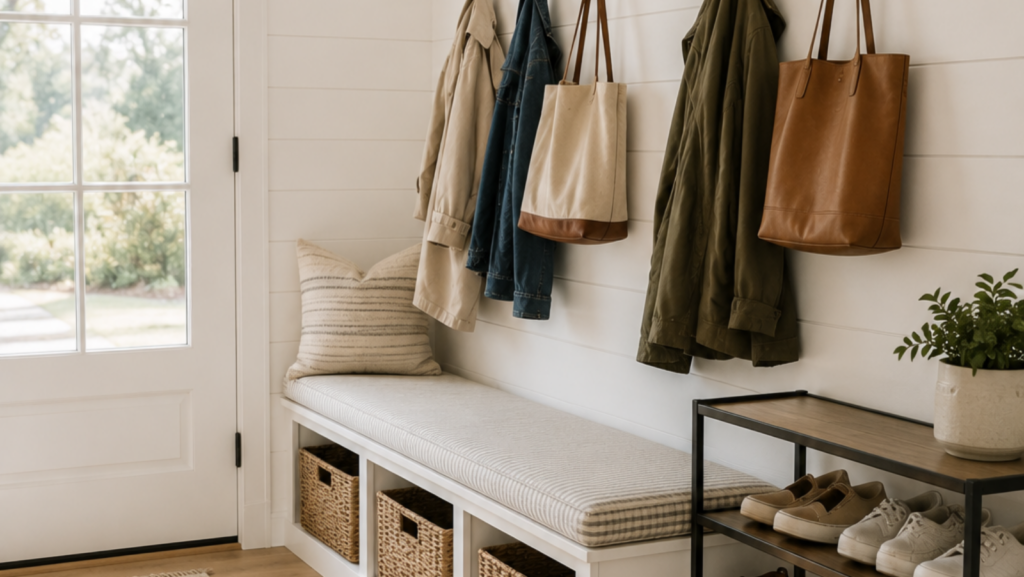
If you live in Minnesota, a mudroom is not a luxury. It is the room that stands between your house and everything winter, spring, and outdoor life drags in with it. Boots, coats, backpacks, dog leashes, wet umbrellas, sports gear, the bag you keep meaning to return: without a dedicated space to catch all of it, it lands wherever it lands. A no mudroom entryway setup that actually functions like one is one of the most practical things you can do for your home. You do not need a renovation or a dedicated room to make it work.
Here is how to build a mudroom zone from scratch.
The First Step in Any No Mudroom Entryway Setup: Pick Your Wall

The first decision is location. In a home without a dedicated mudroom, the mudroom zone almost always lives near the door people actually use. That is usually not the front door. It is the garage entry, the side door, or the back door, whichever one the family uses every single day.
Pick that wall and commit to it. A mudroom zone that is spread across two different areas of the house does not function like a mudroom. It functions like a mess with good intentions. One wall, one zone, one place where everything lands and everything lives.
Start With Hooks Because Everything Else Depends on Them

Hooks are the foundation of any mudroom setup. Without them, coats end up on the floor, bags end up on the nearest chair, and the whole system falls apart within a week.
A wall-mounted hook rail gives you a row of hooks at the right height for the people using the space. If you have kids, a double row hook system with hooks at two heights means everyone has a spot they can actually reach.Not ready to put holes in the wall? Over-the-door hook organizers on a nearby closet door do the same job.
The number of hooks matters. One hook per person in the household plus two extra is a good baseline. When there are not enough hooks, things stop getting hung up.
Add a Bench So Shoes Actually Get Taken Off

A bench changes behavior. Without somewhere to sit, shoes get kicked off in the middle of the floor. With a bench, they come off at the door and stay near the door.
A storage bench does double duty, giving you a seat and a place to stash shoes, hats, or seasonal items inside. If space is tight, a small entryway bench without storage still solves the behavior problem and takes up minimal room. A foldable wall-mounted bench is the right call when the zone is very narrow and the bench needs to disappear when not in use.
Put the bench directly below the hooks so sitting down to take off shoes and hanging up a coat happen in the same spot.
Solve the Shoe Problem Specifically
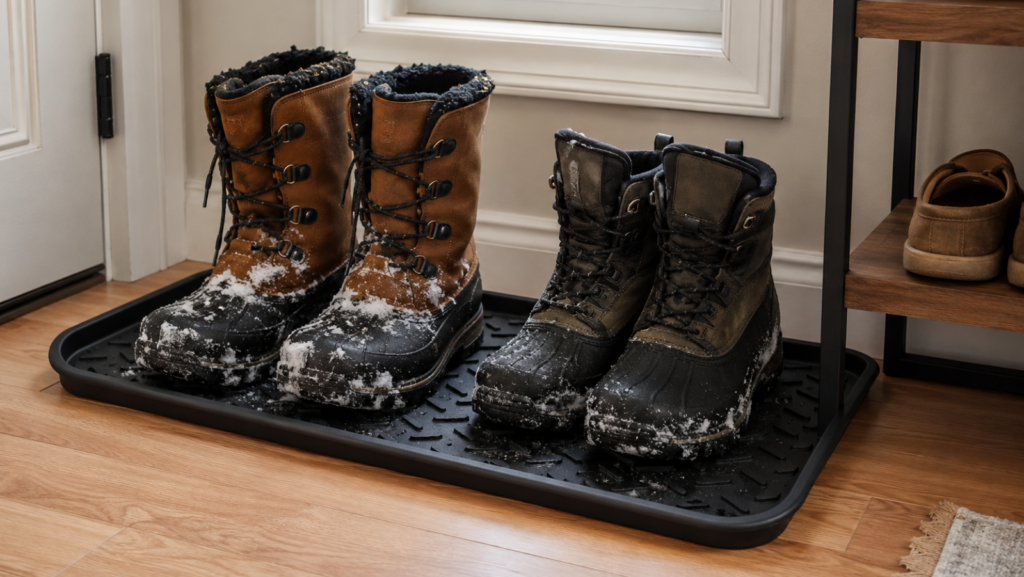
Shoes are the hardest part of any mudroom zone to manage because they are bulky, they multiply, and no one ever puts them away without a system that makes it easier to put them away than to leave them on the floor.
A tiered shoe rack beside or below the bench keeps shoes off the floor and visible without taking up much space. In Minnesota winters, wet boots need more than a rack. A boot tray catches the water and salt that comes off winter boots and keeps it contained rather than spreading across the floor. For families with a lot of footwear, a shoe cabinet with doors keeps the visual clutter out of sight while still keeping shoes accessible at the door.
Give Every Person a Zone

A mudroom that works for a family works because each person knows exactly where their things go. A shared hook rail with no designated spots turns into a pile. A system where each person has their own hook, their own shelf space, and their own basket turns into something that actually gets used.
Cubby storage units are the most efficient way to create individual zones in a small space. Each cubby holds one person’s everyday items and makes it obvious when something is missing or out of place. Labeled baskets inside cubbies or on shelves keep smaller items like hats, gloves, and sunglasses from disappearing into a general pile.
This is especially useful in Minnesota homes where seasonal gear changes completely between summer and winter and each person is managing a different set of items at any given time. If you are building a no mudroom entryway setup for a busy household, individual zones are the piece that makes everything else actually stick.
Handle the Gear That Does Not Fit Anywhere Else

Every household has a category of gear that does not fit neatly into hooks and cubbies. Sports equipment, dog walking supplies, reusable grocery bags, the things that need to be near the door but have no obvious home.
A tall freestanding cabinet beside the mudroom zone keeps oversized or irregular items behind a door so they do not visually take over the space. Wall-mounted bins or baskets handle the smaller category items that need to be grabbable on the way out the door. A dedicated dog station with hooks for leashes, a basket for toys, and a spot for the bag holder keeps pet gear from spreading across the entire zone.
Add a Surface for the Things That Need One
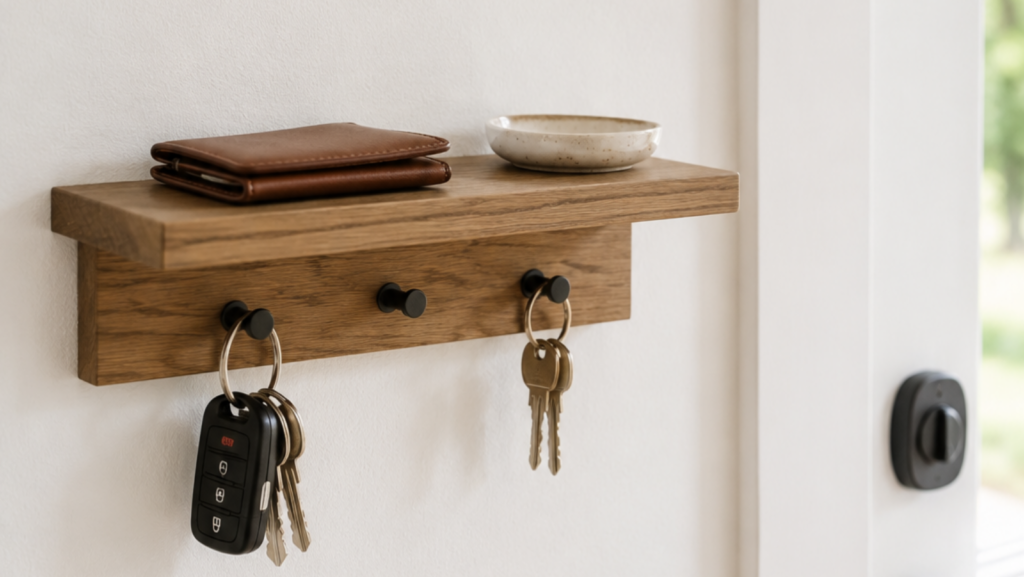
Keys, mail, sunglasses, the permission slip that needs to go back to school tomorrow: these items need a landing spot or they end up everywhere. A mudroom zone without a surface for them does not fully solve the problem.
A small wall-mounted shelf above the hook rail gives these items a home without taking up floor space. A narrow console table beside the bench works if the zone has enough width. A wall-mounted key holder with a small shelf handles the smallest version of this problem when space is very tight.
The surface does not need to be large. It needs to exist and it needs to be the designated spot so items stop landing on the kitchen counter instead.
Make It Work for Minnesota Specifically

A mudroom zone in Minnesota has to handle things that mudroom zones in other climates do not. Winter gear takes up significantly more space than summer gear. Wet and muddy items need somewhere to dry. The transition between seasons means the whole system needs to be flexible enough to shift twice a year.
Seasonal basket rotation is the simplest solution. One basket per person for active season gear stays in the zone. Off-season gear moves to a closet or storage area until it is needed again. This keeps the mudroom zone from becoming a permanent home for every item every person owns for every season.
A drying rack that lives near the mudroom zone handles the wet gear problem without turning the entryway into a laundry situation. In a garage entry setup, a wall-mounted folding drying rack in the garage itself keeps wet items out of the house entirely.
A Note for Buyers and Sellers
If you are buying a home without a mudroom, do not let it be a dealbreaker. The zone can be created almost anywhere there is a wall near the door people use. The investment is small and the impact on daily life is significant.
If you are selling a home without a mudroom, a styled mudroom zone near the entry does something useful during showings. It signals that the home is practical and livable. A hook rail, a bench, and a tidy shoe rack near the garage entry tells buyers that this house works for real life, which is exactly what they are trying to imagine when they walk through. For more on getting your home show-ready, read How to Make a Small Entryway Feel Bigger (Especially in Minnesota Winters).
Everything You Need to Create a Mudroom From Scratch
This post contains affiliate links. If you purchase through one of my links I may earn a small commission at no extra cost to you.
Shop This Post
Wall-Mounted Hook Rail
Double Row Hook System
Over-the-Door Hook Organizer
Storage Bench
Foldable Wall-Mounted Bench
Tiered Shoe Rack
Boot Tray
Shoe Cabinet With Doors
Cubby Storage Unit
Labeled Baskets
Tall Freestanding Cabinet
Wall-Mounted Shelf
Wall-Mounted Key Holder With Shelf
Wall-Mounted Folding Drying Rack

I’m Betsy Rewald with Coldwell Banker Realty in Minnesota, born and raised right here in the Land of 10,000 Lakes! I love helping people find their perfect home, whether it’s their first, their dream upgrade, or the perfect place to downsize.Through my blog, I share tips and ideas for buying and selling, plus insights on great neighborhoods, local events, and ways to make the most of Minnesota living. My goal is to make the home journey fun, stress-free, and full of excitement.Whether you’re new to the area or a lifelong Minnesotan, I’m here to help you feel right at home—and maybe even fall in love with your next move!